Health and Safety Policy for Flat Clearance Ilford
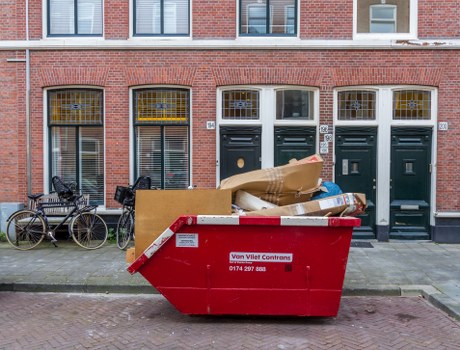 This Health and Safety Policy sets out the approach for safe, lawful and effective flat clearance operations carried out by our team in the designated service area. The policy applies to every stage of a flat clearance, from initial site inspection through removal, transport and lawful disposal of materials. It recognises hazards commonly associated with domestic and small-scale commercial rubbish removal and waste clearance in a service area environment, and outlines controls to protect employees, contractors, residents and visitors. Our aim is to eliminate risks where possible and to control residual risks to an acceptable level by applying best practice and relevant statutory requirements.
The scope covers manual handling, use of lifting equipment, interaction with hazardous materials, traffic management around properties, stairway and corridor working, and temporary storage of items awaiting collection. Staff are required to follow documented procedures and to report unanticipated hazards immediately. Key commitments include provision of training, suitable protective equipment, safe vehicles and appropriate waste segregation. The policy supports a culture in which safety is integral to every flat clearance, rubbish removal and waste disposal activity in our operational service area.
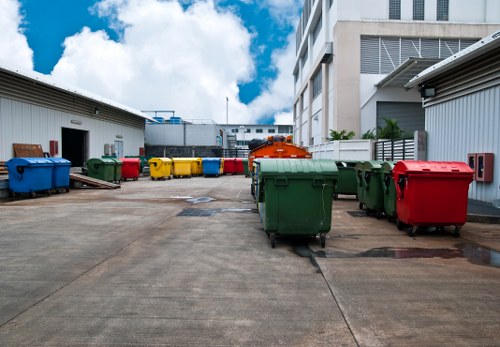 Responsibilities are clearly defined: management must ensure resources are available and procedures are maintained; supervisors must ensure task briefings and monitoring; operatives must follow instructions and use PPE. Visitors and customers are asked to co-operate with on-site safety directions to reduce exposure to hazards. This document emphasises compliance with applicable regulations, industry standards and recognised codes of practice so that every rubbish company task in the clearance service area is completed without harm.
Policy Statement and Legal Compliance
It is the policy of the organisation to provide a safe place of work and to prevent injury or damage to anyone affected by our activities. We will: assess risks, implement control measures, provide suitable equipment and training, and ensure the safe transportation and disposal of waste. This policy is framed to meet general duties under health and safety law and environmental controls that affect rubbish collection, waste handling and flat clearance in urban service areas. It is reviewed periodically to reflect changes in legislation, technology and operational experience.
 Risk assessments are carried out prior to complex clearances, and dynamic risk assessments are used on site where conditions change. Hazardous items such as sharp objects, asbestos-suspect materials, electrical appliances with visible damage, and chemical containers are identified and segregated. Anyone encountering potentially hazardous items must stop work and notify a supervisor. The policy mandates safe disposal routes and prohibits informal dumping to protect public spaces within the service area.
Training and competence are central to control measures. New staff receive induction that covers manual handling techniques, PPE use, vehicle loading methods and traffic awareness specific to rubbish removal routes. Supervisory refresher sessions are scheduled and documented so that standards are consistent across different flat clearance scenarios. Emergency procedures for first aid, spill response and fire are maintained and communicated to all operatives.
Operational Controls, Monitoring and Continuous Improvement
Safe systems of work include pre-job briefings, use of mechanical aids for heavy items, two-person lifts for awkward loads, and clear exclusion zones during loading at property entrances. Vehicles are inspected daily for roadworthiness, secure loading fixtures and spill containment; secure stowage prevents shifting loads that could endanger other road users. Where parking restrictions exist, operatives are trained in temporary traffic control and safe access to properties in the service area without compromising public safety.
 Waste segregation is enforced to maximise recycling and to reduce hazardous waste streams. Clear labelling and containment reduce the likelihood of contamination and accidental exposure. The rubbish company’s operational checks include spot audits, load paperwork verification, and post-job reviews to capture safety observations. Corrective actions are assigned, tracked and closed out to ensure lessons learned drive continual improvement in safety performance.
 Reporting and record-keeping are essential: incidents, near misses and unsafe conditions are logged and analysed to identify trends. Personal protective equipment provision, maintenance records, training logs and vehicle inspections are retained to demonstrate due diligence. The policy encourages a consultative approach that includes employee input into risk controls and recognition of safe behaviours by individuals who contribute to a safer clearance service area environment.
Implementation of this policy requires commitment at all levels. Managers will allocate responsibilities, supervisors will monitor compliance and operatives will follow procedures and use PPE correctly. Contracted partners engaged to support rubbish removal or specialised waste disposal must demonstrate equivalent standards. Together, these measures support safe, efficient flat clearance operations that protect health, property and the environment across the service area.
Periodic review ensures the policy remains effective: performance indicators, audit findings and legislative changes inform revisions. All staff are encouraged to contribute suggestions for improvement and to report hazards without delay. The organisation maintains transparency in its approach to health and safety while ensuring operational needs for waste clearance and rubbish removal are met responsibly.
This Health and Safety Policy for flat clearance activities is a living document that underpins safe working practice for rubbish collection, waste clearance and property clearance tasks in the service area. It is supported by procedures, training, equipment and monitoring designed to deliver measurable safety outcomes and continuous improvement.