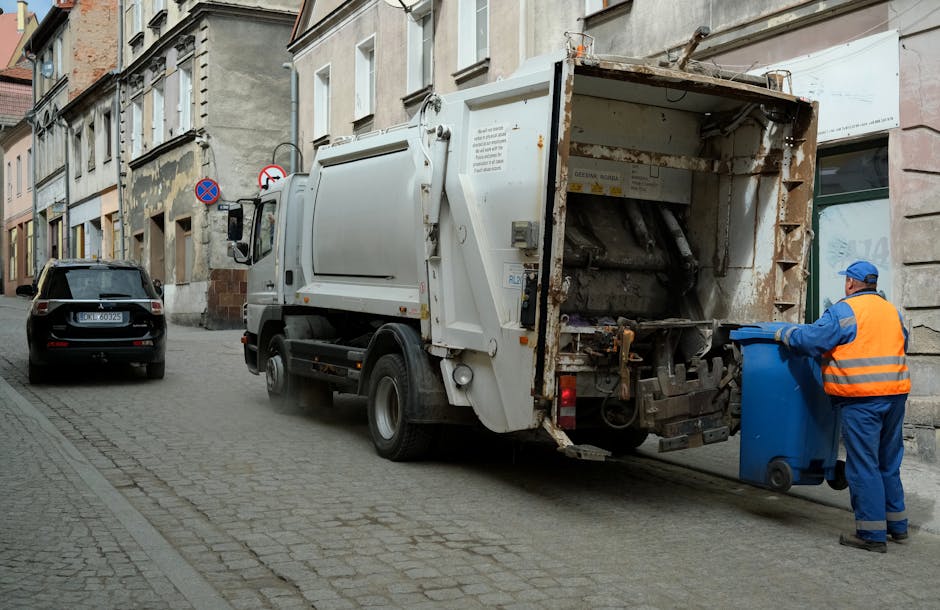
Ilford IG1 rubbish removal guide for Broadway residents
If you live around Broadway in Ilford IG1, rubbish removal has a way of becoming urgent at the worst possible moment. One minute it is a single broken wardrobe in the hallway, the next it is a pile of builders' rubble, an old mattress, and three bin bags that simply will not fit out on collection day. This Ilford IG1 rubbish removal guide for Broadway residents is here to make the whole thing easier to think about. We will walk through what rubbish removal actually involves, how it works in practice, what to watch out for, and how to choose the right method for the job without overpaying or creating extra hassle.
Broadway is busy, lived-in, and practical. That matters. Access, parking, shared entrances, flats above shops, narrow stairwells, and timing all shape how waste should be cleared. So this is not just a generic cleanup article. It is a grounded guide for real local situations, written to help you make a sensible decision quickly, and then get on with your day.
Table of Contents
- Contents
- Why Ilford IG1 rubbish removal guide for Broadway residents Matters
- How Ilford IG1 rubbish removal guide for Broadway residents Works
- Key Benefits and Practical Advantages
- Who This Is For and When It Makes Sense
- Step-by-Step Guidance
- Expert Tips for Better Results
- Common Mistakes to Avoid
- Tools, Resources and Recommendations
- Law, Compliance, Standards and Best Practice
- Options, Methods, or Comparison Table
- Case Study or Real-World Example
- Practical Checklist
- Conclusion
- Frequently Asked Questions
Why Ilford IG1 rubbish removal guide for Broadway residents Matters
Rubbish builds up faster than people expect. A flat clear-out after a tenancy, a renovation in a small property, or a garage that has quietly turned into storage for everything you "might need later" can all produce more waste than a normal household bin system can handle. In a place like Broadway, that can create a second problem: the waste is not just there, it is in the way.
Why does this matter so much? Because messy waste tends to snowball. It blocks movement, attracts pests, creates odours, and makes a property look and feel less cared for. If you are preparing to sell, let, redecorate, or simply reclaim a room, getting rid of rubbish is often the first job that clears the mental fog too. Funny how that works. Clear space, clearer head.
There is also the practical side. Some items can be heavy, awkward, or risky to move without the right handling. Old sofas, broken appliances, and mixed waste from DIY work are common examples. Leaving them to "sort themselves out" rarely ends well, and in a busy area it can become a nuisance to neighbours very quickly.
Expert summary: The best rubbish removal approach for Broadway residents is the one that matches the waste type, access conditions, and timing of the job. Fast is good, but safe and lawful is better.
If you want a broader look at how a local waste service is typically structured, it can also help to read about general waste removal options and the broader recycling and sustainability approach behind responsible clearance.
How Ilford IG1 rubbish removal guide for Broadway residents Works
In simple terms, rubbish removal is the process of collecting, loading, transporting, and disposing of unwanted items or waste in a way that is safe, efficient, and appropriate for the material involved. For residential properties around Broadway, the process usually starts with identifying what needs to go. That sounds obvious, but it is the bit people skip, and then the whole job becomes a guessing game.
Once you know what you are dealing with, the next step is matching the waste to the right method. A few bin bags are not the same as a full flat clear-out. A couple of old chairs are not the same as renovation debris. Mixed waste with electrical items, sharp offcuts, or anything potentially hazardous needs more careful planning.
Typically, a good clearance job follows a simple pattern:
- Assess the items and the volume of waste.
- Separate recyclable, reusable, and non-recyclable material where possible.
- Check access, parking, stairs, lift use, and loading conditions.
- Choose the right disposal route or collection service.
- Remove the waste, sweep through, and leave the area usable again.
That final point matters more than it sounds. Nobody wants half a job. A proper clearance should leave the space in a state where you can actually use it again, not just stare at it from the doorway and sigh.
For home-based projects, many residents compare a general clearance with more specific services such as home clearance, house clearance, or flat clearance depending on the type of property and amount of clutter involved.
Key Benefits and Practical Advantages
A good rubbish removal plan saves time, yes, but that is only the start. It also reduces stress, limits the risk of injury, and helps you avoid the trial-and-error mess of trying to do everything yourself with the wrong vehicle, no gloves, and a slightly optimistic attitude. We have all been there, or at least close to it.
The main benefits for Broadway residents usually include:
- Speed: waste can be cleared in one visit rather than piecemeal trips.
- Convenience: you avoid multiple lift-and-load sessions and the headache of disposal logistics.
- Cleaner living space: clutter removal makes rooms easier to clean, decorate, or rent.
- Safer handling: bulky, sharp, or heavy items are moved with more care.
- Better organisation: separating items during clearance often reveals what can be reused, donated, or recycled.
- Less disruption: a well-planned collection is usually less messy than a DIY chain of borrowed vans and overflowing bags.
There is also a subtle but very real benefit: momentum. Once the waste starts moving out, the whole property feels easier to deal with. That can be the difference between a job that stalls for three weekends and one that is properly finished by tea time.
If you are dealing with old furnishings, it may help to look at furniture clearance and furniture disposal so you can decide whether the items should be removed as part of a broader clearance or handled separately.
Who This Is For and When It Makes Sense
This guide is for Broadway residents who need practical answers, not abstract advice. That might be you if you are clearing a flat after a move, emptying a spare room, handling a landlord turnaround, or sorting a property after years of accumulated clutter. It also fits if you are a homeowner with garden waste, garage clutter, or loft items that have outlived their usefulness.
It makes sense to organise rubbish removal when:
- you have more waste than your household collections can reasonably handle;
- items are too bulky or heavy for regular disposal;
- you need a room cleared before work, sale, or letting;
- the waste includes mixed materials from DIY or refurbishment;
- you want a cleaner, quicker solution than making repeated trips to a disposal point;
- access is awkward and you need someone else to do the lifting and loading.
For example, a resident in a top-floor flat near Broadway might only need a few items removed, but if those items are a broken fridge, a mattress, and several bags of general rubbish, the logistics suddenly become a lot more annoying. That is usually the moment when a proper clearance stops being optional.
If the waste comes from outside spaces, garden clearance or garage clearance may be the more suitable route. If it is business-related, business waste removal is the better fit.
Step-by-Step Guidance
Here is a practical way to tackle rubbish removal without overcomplicating it.
1. Sort what is actually going
Walk through the space and divide items into three groups: keep, donate/reuse, and remove. Be honest here. The "maybe one day" pile is often just delay in disguise.
2. Identify special items early
Some waste needs more care than others. Electrical appliances, fridges, freezers, sofas, mattresses, and anything with sharp or hazardous elements should be identified early so nothing gets missed on the day. If you have appliances to move, a dedicated fridge and appliance removal service can be useful. Sofas and beds may be better handled through mattress and sofa disposal.
3. Check access and parking
This is where Broadway reality kicks in. Is there a narrow stairwell? A shared entrance? Limited kerb space? A lift that is always busy at exactly the wrong moment? These things affect timing and loading, so it is worth thinking through before the collection arrives.
4. Separate hazardous or restricted waste
Do not mix unknown chemicals, paint, oily containers, or other risky materials with general rubbish. If you are unsure, treat it cautiously and get proper advice before moving it. For sensitive waste, hazardous waste disposal is the safer category to look at.
5. Decide whether the whole property needs clearing
If clutter is spread across a flat, loft, or full property, a broader service may be more efficient. Many Broadway households prefer loft clearance or house clearance when the job is larger than a few bulky items.
6. Confirm the expectations before collection
Know what will be taken, what will not, and how the area will be left. This sounds small, but it prevents the usual "Oh, I thought that was included" moment. Nobody enjoys that conversation.
7. Check the finish
Once the waste is gone, do a quick look-through. Make sure walkways are clear, anything left behind was meant to stay, and the space is usable again. A good clearance should feel tidy at the end, not just emptier.
Expert Tips for Better Results
A few small decisions make rubbish removal much smoother. Most of them are simple, and that is the point. Simple is good.
- Take photos before you start sorting: it helps you remember what was there and estimate the amount of waste.
- Keep mixed waste in separate piles: it makes loading and disposal easier, and sometimes cheaper.
- Put the heaviest items near the exit if you can do that safely: it saves double handling.
- Label anything you want to keep: in a real-life rush, one unlabelled box can end up in the wrong pile. It happens.
- Book around your building's quiet times: if you live in a flat or shared block, a calmer slot can make the whole process less tense.
- Ask about reuse and recycling first: not everything needs to be treated as rubbish if it still has life left in it.
A small but useful trick: if you are sorting a room that has become a dumping ground, start with the obvious rubbish first. Empty bottles, torn packaging, old mail, broken bits. Once the noisy clutter goes, it is much easier to think clearly about the larger items.
And if you are clearing after a renovation or room update, you may want to pair the job with builders waste clearance so the heavy construction leftovers are dealt with separately from general household waste.
Common Mistakes to Avoid
Most clearance problems come from rushing the first ten minutes. That is usually where the wrong assumption sneaks in.
- Leaving sorting until collection day: this slows everything down and increases the chance of missed items.
- Mixing hazardous items with general waste: that is a safety issue, not just a tidy-up issue.
- Underestimating volume: a "small pile" has an annoying habit of becoming a van full.
- Forgetting access constraints: a fast plan can fall apart if nobody can actually get the waste out.
- Choosing the wrong disposal method: a flat clearance, office clearance, and garden clearance are not interchangeable.
- Assuming all items can go together: some waste streams need separate handling.
There is also the emotional mistake: holding on to clutter because it feels easier than deciding. Truth be told, that is very human. But it usually means the problem stays in your home a little longer than it should.
If you are clearing work materials or business stock, office clearance may be more appropriate than general household clearance, especially where confidentiality or bulk packaging is involved.
Tools, Resources and Recommendations
You do not need a warehouse of equipment to manage rubbish removal well. In most cases, a few basic items and the right service choice are enough.
| Item or resource | Why it helps | Best for |
|---|---|---|
| Heavy-duty gloves | Protects hands from sharp edges, grime, and splinters | General sorting and moving |
| Strong bin bags or sacks | Keeps loose rubbish contained | Light general waste |
| Marker labels | Helps separate keep, donate, and remove piles | Room clear-outs |
| Trolley or sack barrow | Makes moving bulky items easier | Flats, stairs, heavier items |
| Measuring tape | Confirms whether large items fit through routes | Sofas, wardrobes, appliances |
| Clearance service information | Sets expectations about waste type and collection method | Any larger job |
For residents comparing methods, it can also help to read pricing and quotes so you understand what affects the final cost and why some jobs are simpler than others.
If you are moving business records or sensitive paperwork rather than bulky waste, confidential shredding is the right kind of supporting service to consider. It is one of those things people forget until the files are already stacked by the door.
Law, Compliance, Standards and Best Practice
For rubbish removal in the UK, the key principle is straightforward: waste should be handled responsibly and passed to the right place through the right route. That means you should be careful about who handles your rubbish, what gets mixed together, and whether anything requires special treatment. The exact obligations can vary depending on the waste type and the property, so it is sensible to treat compliance as part of the job rather than an afterthought.
Good practice normally includes:
- keeping hazardous items separate from general waste;
- avoiding fly-tipping or careless roadside dumping;
- using a service that handles waste in a safe and orderly way;
- checking that the company has suitable processes for transport and disposal;
- following the collection terms and site access instructions carefully.
For business premises, there can be extra expectations around waste separation, record keeping, and the handling of confidential or sensitive materials. It is worth taking that seriously rather than assuming domestic habits will do. They usually do not.
Trusted operating practices also matter from a safety perspective. A clear insurance approach, sensible loading methods, and a proper health and safety framework are all signs that the job is being handled responsibly. If that side of things matters to you, reading about health and safety policy and insurance and safety can give you extra reassurance before you book.
Options, Methods, or Comparison Table
There is no single right answer for every Broadway rubbish removal job. The best option depends on what needs removing, how quickly you need it gone, and how much lifting you want to do yourself. Here is a simple comparison.
| Method | Best for | Pros | Trade-offs |
|---|---|---|---|
| DIY removal | Very small amounts of waste | Flexible, direct control | Time-consuming, lifting, transport, disposal uncertainty |
| Skip-style approach | Renovation waste or larger mixed loads | Useful for ongoing work, holds a lot | Needs space, loading effort, permit and access considerations may apply |
| Professional clearance | Bulky items, whole rooms, flats, mixed waste | Fast, less physical effort, more convenient | Usually more of a service decision than a self-managed option |
For readers who want to understand skip suitability better, what can go in a skip is a useful resource. It helps prevent the classic mistake of buying or booking the wrong capacity for the wrong type of waste.
In everyday terms, if your waste is a few manageable bags, DIY might be enough. If it is a proper clear-out with heavy or awkward items, a professional approach is usually less stressful and, honestly, less likely to end with a sore back.
Case Study or Real-World Example
Imagine a Broadway resident clearing a one-bedroom flat after redecorating. There is an old wardrobe, a broken bedside cabinet, two small appliances, several bags of general rubbish, and a stack of cardboard from new furniture deliveries. Nothing dramatic. But together it has become awkward. The hallway is tight, the lift is small, and nobody wants to keep stepping around the pile for another week.
In that kind of situation, the resident could split the job into sensible parts. Cardboard and packaging can be flattened and separated. The wardrobe and cabinets can go with furniture disposal. The appliances can be arranged through appliance removal. The general rubbish can be removed at the same time if the collection is planned properly. What matters is not just taking things away, but arranging the sequence so the space is cleared without repeated handling.
That is the quiet advantage of good rubbish removal. It does not need to be dramatic. It just needs to work. A bit boring, maybe. But boring is welcome when it means the job gets done cleanly.
Practical Checklist
Use this checklist before arranging rubbish removal in Broadway IG1.
- List every item or waste pile that needs to go.
- Separate keep, donate, recycle, and remove piles.
- Check whether anything is hazardous or specialist waste.
- Measure bulky items if access is tight.
- Confirm stairs, lifts, and parking constraints.
- Decide whether you need a full clearance or just item removal.
- Choose the right supporting service for the waste type.
- Prepare a clear path to the items where possible.
- Remove anything you do not want taken before collection day.
- Do a final walk-through after the job is completed.
If the job is broader than expected, you may want to combine services rather than booking several separate visits. For example, a cluttered home might need home clearance plus loft clearance, while a very full property could be better handled through house clearance. That kind of joined-up thinking saves effort, and often a bit of money too.
Get a free quote today and see how much you can save.
Conclusion
Rubbish removal in Broadway does not have to be complicated. Once you know what type of waste you have, how much there is, and what access looks like, the rest becomes much easier to manage. The trick is matching the method to the mess. Not every job needs the same solution, and that is perfectly fine.
For Broadway residents in Ilford IG1, the smart approach is usually the one that keeps the property safe, the process straightforward, and the waste handled properly from start to finish. If you take a little time to sort the job before collection, you will almost always get a smoother result. And that matters more than people think. A clear space has a way of lifting the whole day.
Frequently Asked Questions
What is the best rubbish removal option for Broadway residents in Ilford IG1?
It depends on the waste. Small amounts may be manageable yourself, but bulky furniture, mixed rubbish, or awkward access often make a professional clearance the cleaner choice.
Can I mix furniture, bags of rubbish, and appliances in one clearance?
Sometimes, yes, but only if the collection method is suitable and any special items are separated correctly. Fridges, freezers, and similar items often need their own handling.
Do I need a full house clearance or just waste removal?
If you are clearing out an entire property or several rooms, a broader clearance is usually better. If it is mainly loose rubbish or a few bulky items, waste removal may be enough.
How do I know if something counts as hazardous waste?
If it contains chemicals, oils, unknown liquids, or materials that could be unsafe to move or dispose of casually, treat it carefully and use the relevant specialist route.
What should I do with old sofas and mattresses?
These are best handled through a service that deals with bulky furniture items specifically. They are awkward to move and not always suitable for general waste treatment.
Is it worth sorting recyclable items before collection?
Yes, absolutely. Sorting can make the job easier to handle and may improve the chance of responsible recycling rather than everything going into one mixed pile.
How far in advance should I plan rubbish removal?
For a small job, not much notice may be needed. For larger clear-outs, awkward access, or multiple item types, it is better to plan ahead so the collection can be properly organised.
Can rubbish removal help before a move or tenancy change?
Yes. In fact, that is one of the most common reasons people use it. Clearing waste early makes packing, cleaning, and handover much easier.
What is the difference between flat clearance and house clearance?
Flat clearance is usually more suited to apartments and properties with shared access, while house clearance can involve larger, more varied spaces. The right choice depends on the building and the volume of waste.
Are garden and garage clearances treated differently?
They often are. Garden waste may include green material, soil, or outdoor debris, while garage clearances often involve mixed household items, tools, boxes, and forgotten clutter.
What if I only have a small amount of waste?
Then keep it simple. If it is genuinely only a small amount, you may not need a full clearance. But if the waste is heavy, awkward, or time-sensitive, even a small pile can be harder than it looks.
How can I avoid problems on collection day?
Sort items early, separate anything risky, make access clear, and confirm exactly what is being removed. That one bit of preparation saves a lot of back-and-forth later.
When the dust settles, a well-cleared space feels calmer, lighter, and easier to live in. That is the real payoff, and it is a good one.